| Welcome, Guest |
You have to register before you can post on our site.
|
| Forum Statistics |
» Members: 658
» Latest member: mathakem
» Forum threads: 491
» Forum posts: 5,460
Full Statistics
|
| Latest Threads |
Раздеть девушку онлайн в ...
Forum: Relevant General Discussion
Last Post: PorterEvent
06-10-2026, 03:34 PM
» Replies: 0
» Views: 303
|
Protocol for BESS measure...
Forum: Edge Sharpness Testing
Last Post: grepper
05-02-2026, 08:31 AM
» Replies: 8
» Views: 8,641
|
How to prevent the edge o...
Forum: All About Edges
Last Post: WI_Hedgehog
04-30-2026, 01:12 PM
» Replies: 6
» Views: 17,125
|
Blade Taper Angle? - Supe...
Forum: All About Edges
Last Post: WI_Hedgehog
04-30-2026, 01:01 PM
» Replies: 9
» Views: 27,580
|
Knife dulls overnight aft...
Forum: All About Edges
Last Post: WI_Hedgehog
04-30-2026, 09:01 AM
» Replies: 27
» Views: 89,464
|
The DILAGON: a DIY laser ...
Forum: All About Edges
Last Post: WI_Hedgehog
04-30-2026, 07:57 AM
» Replies: 27
» Views: 113,766
|
Used Rapid Edge Extend-A-...
Forum: Relevant General Discussion
Last Post: WI_Hedgehog
04-30-2026, 06:49 AM
» Replies: 3
» Views: 7,821
|
Saved old tool (Fun with ...
Forum: Relevant General Discussion
Last Post: WI_Hedgehog
04-30-2026, 06:43 AM
» Replies: 1
» Views: 3,227
|
Mike Brubacher has passed
Forum: Relevant General Discussion
Last Post: WI_Hedgehog
04-30-2026, 06:15 AM
» Replies: 2
» Views: 2,631
|
The definition of 'blunt'
Forum: Edge Sharpness Testing
Last Post: subwoofer
02-04-2024, 12:16 PM
» Replies: 2
» Views: 4,996
|
|
|
| Isopropyl for parts cleaning? Good luck finding any |
|
Posted by: grepper - 03-11-2020, 03:31 PM - Forum: Relevant General Discussion
- Replies (10)
|
 |
I keep isopropyl alcohol around for parts cleaning. Sometimes it's just the needed solvent. I like the 99.9% stuff so there is no water residue, but lesser concentration stuff works too in a pinch.
Need some for your shop? Good luck finding any. Herd mentality hoarding has set in and panic buying has wiped out store shelves.
As an aside, and FWIW, my wife is a large grocery store in the area. She just texted me two pictures, one of the empty isopropyl shelf and the other of the shelf for toilet paper. The toilet paper shelf is a BIG shelf, probably 20' feet long and 3' deep. It is barren.
|

|
|
| Edge Angle, Angle Guide, and Blade Body Angle |
|
Posted by: blgentry - 03-10-2020, 03:48 PM - Forum: All About Edges
- Replies (17)
|
 |
As some of you know, I've been using grepper's KallyRest on my Kalamazoo sander. It has an adjustable angle guide, which is a table/rest that you lay the body of the knife on.
In previous sharpening adventures, I've used flat stones and plates and used wooden wedges as an angle guide. With these, you put the wedge on the stone and then lay the knife body on top of the angle wedge.
Many blades are roughly triangular in cross section, even before you get to the edge bevel. If you measure the included angle of the BODY of the blade, you normally will find that knives vary from around 3 degrees inclusive to fairly large angles. I just measured a Cold Steel Recon Tanto and it showed over 12 degrees inclusive.
So, if you want to know the true edge angle, and you're using an angle guide like I'm describing, you have to take into account the angle "offset" of the body. In particular, one half of the included angle is the offset. For a 3 degree inclusive blade, the offset is 1.5 degrees.
With a wedge where you set the body on top of the wedge, the edge is being lifted up by the body. So you have to add the offset to the reference angle. For example, if you have a wedge of wood cut at 15 degrees and you put a 4 degree inclusive knife on top of it, you have to add 1/2 of 4 degrees, or 2 degrees. 15 + 2 = 17 degrees. 17 degrees is the true edge angle that will be ground in.
Or said the other way, if you want a 15 degree edge angle and you have a 4 degree inclusive blade body, you have to account for the 2 degree offset: 15 - 2 = 13. You need a 13 degree WEDGE in order to produce a 15 degree edge angle on a 4 degree inclusive blade body.
Here's where it gets interesting to me. I've been doing these calculations for years and was pretty comfortable with them. When I got the KallyRest and later an angle cube, I planned to do these calculations to put some really low edge angles on a few blades. I'm planning on doing a few at 12 degrees per side and 10 degrees per side. I started to do the subtraction in the previous paragraph and something didn't seem right to me. I thought about it and drew some pictures. It turns out with the KallyRest (or any similar "angle table") the math is backwards!
You see, with the KR, the angle is not a wedge you are sitting on top of. Instead it's a SPACE between the table and the abrasive. So, when you set the blade body on the rest and it has (for example) a 4 degree included angle, you are getting CLOSER to the abrasive. With an angle wedge the body lifts further away from the abrasive! The tool rest is backwards from this. You get closer to the abrasive, therefore the edge angle is DECREASED by the body of the blade. Wow. I know, I know, it's just basic geometry but for me it was a wow moment.
Which means that if I set the KR to 15 degrees and I put my 4 degree (inclusive) blade body on it, I'm going to be grinding in a 13 degree edge angle. Or said the other way, if I want a 15 degree edge angle on my 4 degree blade body, I have to add the offset. 15 (edge) + 2 (offset) = 17. I need to set the KR to 17 degrees in order to get a 15 degree edge angle on this 4 degree blade body.
One of the blades I want to take to somewhere between 9 and 11 degrees (edge angle) is a full flat ground Delica. I've measured it's body angle at 3.7 degrees inclusive. So to take it to 11 degrees (edge). I need to set the KR to: 11 + (3.7/2) = 12.85 degrees. Neat.
I might make a video about this. I'm not sure if the words I've written are clear enough to get the meaning across. Let me know if this makes sense and/or if anyone would like to see a video about this subject.
Thanks for reading.
Brian.
|
|
|
|
| Sharpening story - pesky knife to sharpen |
|
Posted by: grepper - 03-03-2020, 11:31 PM - Forum: All About Edges
- Replies (7)
|
|
I was given a dozen knives to sharpen, 6 steak knives, 4 8” chef’s knives and a couple of shorter santoku. Nothing special, just average good quality knives. Except for one they were Henckels type variety with modern sealed mostly impervious to anything plastic like handles. You know the type.
One however had a wood handle. The handle was totally dried out and starting to show small cracks. The type of damage that occurs during the heat cycle in a dishwasher. I didn’t think to take a picture of it because it was just another knife. Nothing remarkable, just a wood handle knife. It looked exactly like this one I found on ebay.

I checked it out before I sharpened it and there were a number of small chips in the edge. The chips weren’t very big. I didn’t think much of it and went about sharpening with my usual method using a 150 grit Cubitron and deburred with a Scotch-Brite belt. When I was done I checked it out and the chips were still there. Crap!
So I reground the edge but the chips seemed to propagate. I couldn’t seem to grind away the little chips out of the edge. Very frustrating. So I reasoned that maybe the 150 grit was too coarse and switched to a used 180 grit Deer ceramic belt. For whatever reason that worked and removed the chips. Then I deburred as usual with the S-B belt. The blade was nice and sharp, well deburred and no doubt not bad at all.
But… the 180 grit belt that I used was pretty old and no longer really 180 grit. I imagined that that I was not giving the guy as toothy an edge as I would like. So, I started over and reground the edge with the 150 Cubitron. This time, for whatever reason it worked. No chipping.
I’m not sure what was happening with that blade, but I needed to get rid of the chips with a finer grit abrasive before I could grind with a 150 grit for a nice toothy edge. The steel didn’t seem particularly hard but it was prone to chipping. Live and learn I guess. I spent well over an hour on that knife. When I was done the sharpness ranged from 130-170 along the edge. Not as consistent as I would like, but plenty sharp enough and nice and toothy.
But I wasn’t done yet. It was a nice knife and it bothered me that the handle was so dry and starting to crack. I returned all the other knives but kept that one for two days. I gave he handle a good thick coat of a combination of mineral oil, carnauba and bee’s wax. Then put the knife over the heat register and let it all soak in for hours, wiped it clean and repeated the process. I did that 3 or 4 times over the two days. When done, the handle looked really nice and was in much better condition.
Unless it’s for a friend I actually charge for sharpening, but have no illusions about making any money doing. I do it for fun because I enjoy it. I charge $2.00 for less than 5” blades and jack the price up to a whopping $2.50 for > 5” blades, not counting really long blades like machetes. Over many years I’ve made just enough to pay for the Kally. What more could I ask?
Anyway, I think the guy got a good deal for $2.50. Hope you enjoyed the story.
|
|
|
|
| Dust mask for sharpening? - Good luck finding one |
|
Posted by: grepper - 02-27-2020, 02:36 PM - Forum: Relevant General Discussion
- Replies (4)
|
|
Need a dust mask for sharpening? Good luck finding one… anywhere.
Due to COVID-19 fears (hysteria?) the shelves of local stores are deplete of masks and respirators. Same with on-line suppliers. Even the very large suppliers with deep inventory such as McMaster and other major industrial safety equipment, painter supplies, welding shops, etc., are wiped out of stock.
When I heard about the shortage I checked it out on-line. I actually ended up spending a couple of hours at it going from supplier to supplier. Sure enough, it was a futile effort. Like chasing the proverbial wild goose. There are still some wimpy large particulate masks around, but anything N95 or better rated are basically unavailable. This is not good for businesses that need a constant supply of masks for the shop environment.
The whole thing gave me sort of an eerie-freaky feeling like actually seeing the seeds of one of those apocalyptic sci-fi movies unfolding before my very eyes. Soon there will be roving disheveled hoards of the unwashed, clad only in tatters with newspaper wrapped in duct tape for shoes huddled around 55 gallon drums of smoldering trash for warmth. Police drones will fill the skies in an attempt to maintain social order and seek out the newly undead zombie dudes stumbling around in search or living flesh for lunch. (Sorry, I let my imagination get the better of me.)
But less humorously, if you need masks and/or respirators for a shop environment the outlook for sourcing any, especially in the near/foreseeable future, appears to be rather bleak.
|
|
|
|
| Micro-burr only in one side, and it will not flip |
|
Posted by: Southbound - 02-16-2020, 07:08 PM - Forum: Burr Removal Methods, Testing and Results
- Replies (9)
|
|
Hello all,
I have a question concerning wire edges on straight razors. For some odd reason i always have a very very small micro burr towards the heel of my razor when I finish honing. I only use 10x magnification and I have a bare/clear incandescent 150watt light bulb over my honing area. The very tiniest burrs can be seen if your under the correct lighting. I understand the art of honing it is to know when to quit honing, but even if everything is done right they may still be microscopic bits of burr/fin that doesn't want to detach from the apex. Some guys recommend dragging the edge through end grain wood, but i think that fractures the edge. I was reading also so will draw the edge through animal horn. I gave tried both and I am not a fan its just not to effective.
I understand the burrs are maybe not hardened steel any more, because the metal has went through plastic deformation. They just don't want to let get(especially the micro ones!) I don't try and aim for a burr while honing straights but it sometimes happens. For example a rather large burr on a knife, chisel etc - when your alternating sides the burr can and will flip from side of side until it is cut off, but with a very tiny micro burr on a knife, razor or any tool - it seems to not flop from one side to the other while alternating strokes, but it tends to stay 'on one side' - these type of burrs that don't flop when alternating side, but stay on one side, well IME even bare leather or linen want coax then off for some reason. I hope that i am making sense! I am not to good at articulating what I am trying to say or write. I like to finish on natural stones, but at times I use synthetic to finish. My sequence is 1.5k, 5k, then Jnat, with koma sluuy and last tomo. I like my razor to at least pass a hht1-2ish after stropping at 5k, and I try to make sure there's no burrs at 5k, but sometimes they are very very micro. My question is what do you think of stropping on bare wood, with no compound? Not just any wood but one of the hardest wood on earth (lignum vitae?) Does this sound like a crazy idea? I figured a really hard wood would cut off any bits of detached burr?? IMO this doesn't look like a normal wire edge but it looks like fuzzy glints only in sections, if that makes sense. How can something so weak be so hard to coax off? I figured the lignum wood may help remove it, because of its lubrication properties and it's hardness may help??
Thanks
Mike
|
|
|
|
| TM02 vs DTC100 |
|
Posted by: SHARPCO - 02-10-2020, 02:59 AM - Forum: Edge Sharpness Testing
- Replies (3)
|
 |
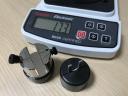
I tested it with DE razor blade.
[Test 1]
TM02: 63, 63, 64 (avg: 63.3)
DTC100: 51, 54, 45 (avg: 50)
>>> TM02=DTC100+13.3
[Test 2]
TM02: 66, 69, 76 (avg: 70.3)
DTC100: 43, 51, 49 (avg: 47.6)
>>> TM02=DTC100+22.7
[Test 3]
TM02: 63, 73, 64 (avg: 66.6)
DTC100: 59, 55, 52 (avg: 55.3)
>>> TM02=DTC100+11.3
[My Conclusion]
1. The score measured by DTC100 is abt.10~20 BESS lower the score measured by TM02.
2. TM02 = DTC100+15 BESS
|
|
|
|
|