


I have no experience with industrial blades sharpening, nevertheless I see some similarity with sharpening plane irons. I do it on Tormek and the customers are satisfied.
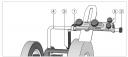
A blade of 1.5" width requires careful alignment in the so called square edge jig. Before sharpening the stone has to be flat and parallel with the support bar on which the jig moves sideways. If necessary to stone surface has to be trued with guided diamond tip.
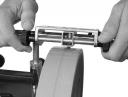
Setting the edge angle is not difficult, but more challenging is setting the (almost) same angle for honing the edge on the leather honing wheel. The blade is still in the jig and moves sideways guided by the support bar.
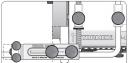
Following this simple Tormek protocol I usually do not have difficulties with burr removal, contrary to freehand honing case. The sharpening occurs towards the edge while the honing of course away from the edge.
The bevel has hollow shape, but it can be shown that it is not weaker compared to flat grind.
Jan
A blade of 1.5" width requires careful alignment in the so called square edge jig. Before sharpening the stone has to be flat and parallel with the support bar on which the jig moves sideways. If necessary to stone surface has to be trued with guided diamond tip.
Setting the edge angle is not difficult, but more challenging is setting the (almost) same angle for honing the edge on the leather honing wheel. The blade is still in the jig and moves sideways guided by the support bar.
Following this simple Tormek protocol I usually do not have difficulties with burr removal, contrary to freehand honing case. The sharpening occurs towards the edge while the honing of course away from the edge.
The bevel has hollow shape, but it can be shown that it is not weaker compared to flat grind.
Jan