


Mr. Mark, thank you for mentioning galling**.
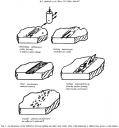
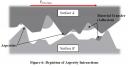
Only recently I have corrected my older opinion that galling requires significant load between the rubbing surfaces. My current understanding is, that at higher speed also low contact load between the surfaces can cause galling.
I was curious to know more about the size of the surface speed, and have found one wear classification which considers speed larger than 0.7 m/s for sufficient to cause galling.
My Tormek with 90 rpm has surface speed about 1.2 m/s!
Jan
** ASTM G40-15 defines galling as "a form of surface damage arising between sliding solids, distinguished by macroscopic, usually localized, roughening, and the creation of protrusions above the original surface; it is characterized by plastic flow and may involve material transfer."
Only recently I have corrected my older opinion that galling requires significant load between the rubbing surfaces. My current understanding is, that at higher speed also low contact load between the surfaces can cause galling.
I was curious to know more about the size of the surface speed, and have found one wear classification which considers speed larger than 0.7 m/s for sufficient to cause galling.
My Tormek with 90 rpm has surface speed about 1.2 m/s!
Jan
** ASTM G40-15 defines galling as "a form of surface damage arising between sliding solids, distinguished by macroscopic, usually localized, roughening, and the creation of protrusions above the original surface; it is characterized by plastic flow and may involve material transfer."