


Mr. Mark, you are not missing anything. In my understanding the oval grindstone is today a curiosity. 

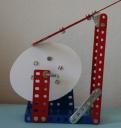
It is not so easy to imagine how it works, and so I have prepared a model. I have assumed that the oval is an ellipse with axes ratio 4:5. The blade is guided by a jig which fixes the blade protrusion from a pivot.
When the vertex of the oval stone meets the edge than it grinds the desired bevel angle.
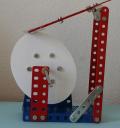
When the stone rotates towards the co-vertex, than the contact point with the blade moves away from the edge.
When the co-vertex of the oval stone meets the blade than we have reached the most distant spot of the blade.
Jan
It is not so easy to imagine how it works, and so I have prepared a model. I have assumed that the oval is an ellipse with axes ratio 4:5. The blade is guided by a jig which fixes the blade protrusion from a pivot.
When the vertex of the oval stone meets the edge than it grinds the desired bevel angle.
When the stone rotates towards the co-vertex, than the contact point with the blade moves away from the edge.
When the co-vertex of the oval stone meets the blade than we have reached the most distant spot of the blade.
Jan


![[Image: 24m8etx.jpg]](http://i65.tinypic.com/24m8etx.jpg)