


09-08-2017, 06:23 PM
Thanks to Mr. Rupert I have the Work Sharp M3 Knife Sharpener here for testing. When I have completed checking it out, I will send it to our esteemed moderator and bladesmith Mr. Mark for further evaluation. A big thanks for your community minded generosity Mr. Rupert!
Before receiving the M3 and having only seen it in pictures, I was guessing that it would be a fairly cheap thing with a cheesy, light-weight plastic handle. Suffice it to say, I was wrong.
It arrived professionally packaged and my first impression was that it was much heavier than I would have expected.
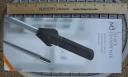
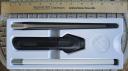
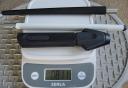
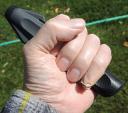
Nothing about it evokes a feeling of cheap and flimsy at all. The handle has weight and heft, and is big enough around for a firm grip even for larger hands. The surface is non-slip knurled rubber, and feels very secure in the hand. I’m sure that even wet slipping would not be a problem.
According to Work Sharp the ceramic rod is 12 micron, so around 1500 grit. It feels very smooth to the touch. That’s about the abrasiveness that I like in a ceramic rod used primarily for edge straightening maintenance rather than sharpening. Two opposing sides of the rod are flat with ridges running the length of the rod and parallel to it. The other two sides are rounded.
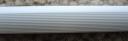
Work Sharp states the diamond sharpening rod is 325 grit, and it feels sharp and pretty aggressive. I have no doubt it can remove steel. A nice touch is that a sturdy plastic sheath is included.
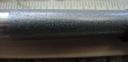
Both the ceramic and diamond rods have a metal end that when inserted into the handle slide over a steel post and are held firmly in place by a strong magnet. Both fit the handle perfectly and there is no wobble. I suspect this arrangement is very durable.
The business end of the handle contains the MicroForge engine. It consists of a freewheeling, ~7 mm diameter ridged metal wheel set at about 45° from the handle. The idea is that you hold the blade flat against the handle and with moderately firm pressure drag the blade through the MicroForge roller once. The optimal amount of pressure required is not stated as far as I can discover. Somewhere I read about the same amount of pressure required to cut a sweet potato, whatever that means. I suspect that it may vary from blade to blade, and that with some experience the user develops a “feel” for it. That type of thing.
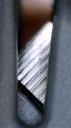
At this point I cannot speak to the durability of the unit, or how long the MicroForge wheel will remain sharp enough to function adequately. It would be nice if the wheel was user replaceable, but it does not appear to be so. Maybe that is a non-issue. If you look closely at the picture of the wheel, it appears that it is either quite coarsely ground or that it might be coated with abrasive. It is difficult to tell. Could it be diamond coated? That would certainly enhance durability.

That’s as far as I have gotten so far. I’ll conclude this part of the review by saying that the M3 appears to be a very well considered, solid and quality tool.
Before receiving the M3 and having only seen it in pictures, I was guessing that it would be a fairly cheap thing with a cheesy, light-weight plastic handle. Suffice it to say, I was wrong.
It arrived professionally packaged and my first impression was that it was much heavier than I would have expected.
Nothing about it evokes a feeling of cheap and flimsy at all. The handle has weight and heft, and is big enough around for a firm grip even for larger hands. The surface is non-slip knurled rubber, and feels very secure in the hand. I’m sure that even wet slipping would not be a problem.
According to Work Sharp the ceramic rod is 12 micron, so around 1500 grit. It feels very smooth to the touch. That’s about the abrasiveness that I like in a ceramic rod used primarily for edge straightening maintenance rather than sharpening. Two opposing sides of the rod are flat with ridges running the length of the rod and parallel to it. The other two sides are rounded.
Work Sharp states the diamond sharpening rod is 325 grit, and it feels sharp and pretty aggressive. I have no doubt it can remove steel. A nice touch is that a sturdy plastic sheath is included.
Both the ceramic and diamond rods have a metal end that when inserted into the handle slide over a steel post and are held firmly in place by a strong magnet. Both fit the handle perfectly and there is no wobble. I suspect this arrangement is very durable.
The business end of the handle contains the MicroForge engine. It consists of a freewheeling, ~7 mm diameter ridged metal wheel set at about 45° from the handle. The idea is that you hold the blade flat against the handle and with moderately firm pressure drag the blade through the MicroForge roller once. The optimal amount of pressure required is not stated as far as I can discover. Somewhere I read about the same amount of pressure required to cut a sweet potato, whatever that means. I suspect that it may vary from blade to blade, and that with some experience the user develops a “feel” for it. That type of thing.
At this point I cannot speak to the durability of the unit, or how long the MicroForge wheel will remain sharp enough to function adequately. It would be nice if the wheel was user replaceable, but it does not appear to be so. Maybe that is a non-issue. If you look closely at the picture of the wheel, it appears that it is either quite coarsely ground or that it might be coated with abrasive. It is difficult to tell. Could it be diamond coated? That would certainly enhance durability.
That’s as far as I have gotten so far. I’ll conclude this part of the review by saying that the M3 appears to be a very well considered, solid and quality tool.


 That's way better than I could do presently.